CN
CN EN
EN


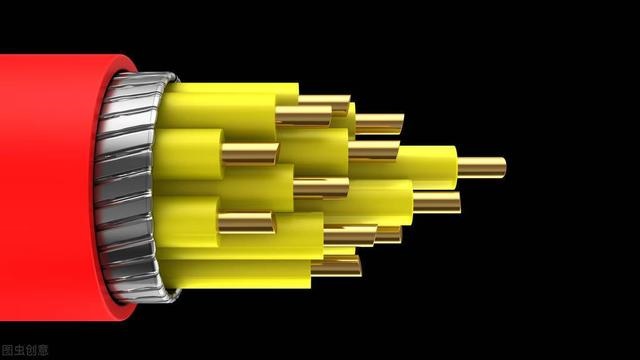
Currently, the cable industry commonly refers to cables with certain fire performance characteristics, such as flame retardant, halogen-free low smoke, low halogen low smoke, or fire resistant, collectively as fire-resistant cables.
(1) Flame Retardant Cables
Flame retardant cables are designed to delay the spread of flame along the cable, preventing the fire from expanding. Due to their low cost, they are widely used in fire-resistant cable applications. Whether in single cable or bundled installation conditions, these cables can confine the spread of flame within a certain range when burned, thereby avoiding major disasters caused by cable fire spread and improving the fire safety level of cable lines.
(2) Halogen-Free Low Smoke Flame Retardant Cables
Halogen-free low smoke cables not only exhibit excellent flame retardancy but are also made of materials free from halogens. When burned, they produce low corrosivity and toxicity, with minimal smoke generation, thereby reducing harm to people, instruments, and equipment, which facilitates timely rescue during a fire. Although halogen-free low smoke flame retardant cables offer excellent flame retardancy, corrosion resistance, and low smoke density, their mechanical and electrical properties are slightly inferior to those of ordinary cables.
(3) Low Halogen Low Smoke Flame Retunrdant Cables
The hydrogen chloride emission and smoke density indicators of low halogen low smoke flame retardant cables fall between those of flame retardant cables and halogen-free low smoke flame retardant cables. Low halogen cables also contain halogens, but in lower amounts. These cables not only provide flame retardancy but also emit less smoke and lower hydrogen chloride when burned. Such cables are typically made from PVC-based materials, combined with efficient flame retardants, hydrogen chloride absorbers, and smoke suppressants. Thus, this flame retardant material significantly improves the combustion performance of ordinary flame retardant PVC materials.
(4) Fire Resistant Cables
Fire resistant cables can maintain normal operation for a certain period under flame combustion, ensuring circuit integrity. These cables produce low levels of acidic gas and smoke during combustion, significantly enhancing fire resistance. Particularly under conditions such as water spraying and mechanical impact during a fire, the cables can still maintain circuit operation.
(5) Flame Retardant Cable Standards and Ratings
The main technical indicators related to fire safety in cables are the flame retardancy of CO² cables, smoke density, and gas toxicity. U.S. fire standards focus more on the first two issues, while Europe and the U.S. hold completely different views on fire safety. The traditional U.S. perspective believes that the root cause of fire lies in the generation of carbon monoxide poisoning and the subsequent heat release when CO converts to CO₂ during combustion. Therefore, controlling the heat release during combustion can reduce fire hazards. Europe has long believed that the amount of halogen acid released, gas corrosivity, smoke density, and gas toxicity during combustion are the main factors determining whether people can safely escape a fire scene.
1) IEC Flame Retardant Ratings
To evaluate the flame retardancy of cables, the International Electrotechnical Commission (IEC) has established three standards: IEC 60332-1, IEC 60332-2, and IEC 60332-3. IEC 60332-1 and IEC 60332-2 are used to evaluate the flame retardancy of a single cable under inclined and vertical installation conditions (corresponding to Chinese standards GB 12666.3 and GB 12666.4). IEC 60332-3 (corresponding to Chinese standard GB 12666.5-90) is used to evaluate the flame retardancy of bundled cables under vertical burning conditions. In comparison, the requirements for flame retardancy under vertical burning of bundled cables are much higher.
IEC 60332-1/BS 4066-1 Flame Retardant Rating (Single Wire or Cable Vertical Burning Test): This is the flame retardant standard for a single cable. The test specifies that a 60 cm long sample is vertically fixed in an open metal box, and a propane burner with a flame length of 175 mm contacts the cable at a 45-degree angle from a position 450 mm away from the upper fixed end of the sample. If the burned portion of the sample does not exceed 50 mm from the lower fixed end, the test is passed.
IEC 60332-3/BS 4066-3 Flame Retardant Rating: This is the flame retardant standard for bundled cables. The test specifies that bundled cable samples of 3.5 m length are fixed on a ladder-shaped test rack with iron wire, and the number of samples is determined based on the non-metallic material requirements for different classifications. The samples are vertically hung on the back wall of the combustion furnace, and air is introduced through the intake port on the bottom plate. A propane flat burner contacts the sample with a 750°C flame. Under forced air blowing (airflow discharge 5 m³/min, wind speed 0.9 m/s), the cables must not ignite within 20 minutes of vertical burning, and the flame must self-extinguish within 2.5 meters. IEC 60332 is divided into Class A, B, C, and D to evaluate the flame retardancy performance.
2) UL Flame Retardant Standards
If any cable listed by UL is tested and verified to meet a certain fire rating, it can be printed with the UL identification, fire rating, and approval number.
Plenum Grade - CMP (Airflow Burning Test/Steiner Tunnel Test): This is the highest requirement among UL fire standards for cables, applicable to safety standard UL 910. The test specifies that multiple samples are laid on the horizontal air duct of the device and burned with an 87.9 kW gas Bunsen burner (300,000 BTU/hr) for 20 minutes. The pass standard is that the flame must not extend beyond 5 feet from the front end of the gas Bunsen burner flame. The peak optical density must not exceed 0.5, and the average density must not exceed 0.15. Such CMP cables are typically installed in ventilation ducts or air return plenum systems used by air handling equipment and are recognized in Canada and the United States. FEP/PLENUM materials that meet UL 910 standards have better flame retardancy than low-smoke zero-halogen materials that meet IEC 60332-1 and IEC 60332-3 standards and produce lower smoke concentration when burned.
Riser Grade - CMR (Vertical Burning Test): This is a commercial-grade cable in UL standards, applicable to safety standard UL 1666. The test specifies that multiple samples are laid on a simulated vertical shaft and burned with a specified 154.5 kW gas Bunsen burner (527,500 BTU/hr) for 30 minutes. The pass standard is that the flame must not spread to the upper part of a 12-foot-high room. Riser-grade cables have no smoke concentration specifications and are generally used for vertical and horizontal wiring between floors.
Commercial Grade - CM (Vertical Burning Test): This is a commercial-grade cable in UL standards, applicable to safety standard UL 1581. The test specifies that multiple samples are laid on an 8-foot-high vertical bracket and burned with a specified 20 kW ribbon torch (70,000 BTU/hr) for 20 minutes. The pass standard is that the flame must not spread to the upper end of the cable and must self-extinguish. UL 1581 is similar to IEC 60332-3C, except for the number of cables laid. Commercial-grade cables have no smoke concentration specifications and are generally only used for horizontal wiring on the same floor, not for vertical wiring between floors.
General Grade - CMG (Vertical Burning Test): This is a general-grade cable in UL standards, applicable to safety standard UL 1581. The test conditions for commercial grade and general grade are similar, and both are recognized for use in Canada and the United States. General-grade cables have no smoke concentration specifications and are generally only used for horizontal wiring on the same floor, not for vertical wiring between floors.
Residential Grade - CMX (Vertical Burning Test): This is a residential-grade cable in UL standards, applicable to safety standard UL 1581, VW-1. The test specifies that the sample is kept vertical and burned with a test torch (30,000 BTU/hr) for 15 seconds, then stopped for 15 seconds, repeated five times. The pass standard is that the residual flame must not exceed 60 seconds, the sample must not be burned more than 25%, and the cotton placed at the bottom must not be ignited by falling objects. UL 1581-VW-1 is similar to IEC 60332-1, except for the burning time. This grade also has no smoke or toxicity specifications and is only used in home or small office systems where a single cable is installed. Such cables should not be used in bundles and must be installed in conduits.
3) Smoke Density, Halogen Content, and Toxicity Ratings
IEC 60754-1/BS 6425-1 Determination of Halogen Gas Content: This is the specification for hydrogen chloride emission concentration in IEC and BS standards. Halogens include fluorine, chlorine, bromine, iodine, and the radioactive volatile element astatine, which are highly toxic. The test specifies that when the combustion furnace is preheated to 800°C, a built-in 1.0g sample is pushed into the furnace, and the airflow rate is used to dissolve HCl into water, after which the halogen acid content of the aqueous solution is measured. If the halogen acid emission of the cable material during combustion is less than 5 mg/g, it can be called a halogen-free cable. If the halogen acid emission is greater than 5 mg/g but less than 15 mg/g, it can be called a low-halogen cable. It is worth noting that the IEC 60754-1 method cannot be used to measure materials with an HCl content of less than 5 mg/g, meaning it cannot determine whether they are "halogen-free." To determine whether they are completely halogen-free, the IEC 60754-2 method can be used.
IEC 60754-2 Measurement of Gas Acidity: This is the specification for the corrosiveness of combustion gases in IEC standards. This test measures the acidity of halogen acid gases produced by materials during combustion by determining the pH value and conductivity of the aqueous solution. The test specifies that the combustion furnace is preheated to 800°C, and a quartz tube with a built-in sample is pushed into the furnace while timing begins. In the first 5 minutes of sample combustion, the pH value and electrical conductivity are measured every minute, and for the next 25 minutes, they are measured every 5 minutes. Generally, halogen-free cable materials have a pH value greater than 4.3 and a conductivity of less than 10 μS. The lower the pH value, the higher the acidity of the halogen acid gas emitted by the material. It is worth noting that when the HCl content is greater than 2 mg/g but less than 5 mg/g (i.e., meeting the requirements of IEC 60754-1), the pH value of its aqueous solution is also less than 4.3, meaning it does not meet the requirements of IEC 60754-2.
IEC 61034-1/ASTM E662 Smoke Density: This is the specification for smoke density in IEC and ASTM standards. The test consists of a 3m³ cube and a photometric measurement system with a light source. A rectangular tray containing alcohol is used as the combustion source. A blower with a power of 10-15 m³/min ensures uniform distribution of smoke and prevents flame vortices on the tray. When the alcohol burns, a recorder connected to the light source records the reduction in light. Smoke density is measured by light transmittance. If a light transmission value of 60% can be achieved, the cable material meets the low-smoke standard. The higher the light transmittance, the less smoke the material releases during combustion.
ISO 4589-2/BS 2863 Oxygen Index: This is the specification for oxygen index in ISO and BS standards. It refers to the minimum oxygen concentration in air at room temperature required to support combustion of a material. The higher the oxygen index value, the more flame-retardant the material is. If a material has an oxygen index of 21%, it means the material will ignite spontaneously at normal room temperature since the oxygen content in air under normal room conditions is 21%. Generally, flame-retardant cables have an oxygen index greater than 33%.
ISO 4589-3/BS 2782.1 Temperature Index: This is the specification for temperature index in ISO and BS standards. The oxygen index of a material decreases as the temperature increases. When the temperature rises and the oxygen index of the material drops to 21%, the material will ignite spontaneously. This temperature is called the temperature index. For example, the oxygen index of coal at room temperature is 50%, but when the temperature rises to 150°C, the oxygen index drops to 21%, and the material will ignite immediately. Thus, the temperature index of this material is 150°C. Generally, flame-retardant cables have a temperature index greater than 250°C.
NES 713 Toxicity Index: This is the specification for the toxicity of gases produced by cable materials during combustion in the British Naval Engineering Standard (NES). Toxicity refers to the property of destroying the structure or disrupting the function of an organism. The toxicity index represents the total toxicity performance of all gases produced during material combustion. The test specifies that the combustion furnace is preheated to 800°C, and the toxic substances contained in the cable material are burned separately. The airflow rate is then used to collect each toxic gas, and chemical analysis is performed to calculate the content of each toxic substance. This index is expressed numerically. The higher the toxicity index, the higher the toxicity of the gases released by the material. Generally, halogen-free cable materials have a toxicity index of less than 5. It is worth noting that low-smoke zero-halogen materials also produce toxic CO when burned. If the material contains P, N, or S, even more toxic gases are generated. Therefore, halogen-free cables cannot be called non-toxic cables but should be called low-toxicity cables.
CM, CMR, and CMP cables, as they need to meet strict UL fire standards, often use materials containing halogens. CM and CMR cables are generally based on polyvinyl chloride (PVC), and PVC materials contain chlorine. CMP cables are generally based on Teflon (polytetrafluoroethylene), and FEP materials contain fluorine. The gas toxicity produced by such halogen-containing cables is several times greater than that of halogen-free cables, posing significant potential safety hazards in fires. It may lead to most casualties in a fire scene not being burned to death but suffocated by toxic gases.
4) IEC Fire Resistance Ratings
Fire-resistant cables refer to cables that can maintain normal operation for a certain period under flame combustion, i.e., maintaining circuit integrity. To evaluate the fire resistance performance of cables, the International Electrotechnical Commission and the British Electrotechnical Committee have formulated the IEC 331 and BS 6387 standards, respectively. In comparison, BS 6387 has much higher requirements for fire resistance capability.
IEC 60331 Flame Retardant Rating: In IEC 60331-1999, the fire temperature requirement is 750°C/3h level, indicating that it does not break down when burned horizontally at 750°C under 300 volts for 3 hours.
BS 6387 Flame Retardant Rating: BS 6387 requires passing horizontal burning test, water spray test, and mechanical impact vibration burning test.
Horizontal burning tests are classified as Class A 650°C/3h, Class B 750°C/3h, Class C 950°C/3h, and Class S 950°C/3min.
Class A: Does not break down when burned horizontally at 650°C under 300 volts for 3 hours.
Class B: Does not break down when burned horizontally at 750°C under 300 volts for 3 hours.
Class C: Does not break down when burned horizontally at 950°C under 300 volts for 3 hours.
Class S: Does not break down when burned horizontally at 950°C under 300 volts for 3 minutes.
Water spray burning test is classified as Class W, indicating that it does not break down when burned for 15 minutes under 300 volts and then sprayed with water while burning for another 15 minutes.
Impact vibration burning tests are classified as Class X 650°C/15min, Class Y 750°C/15min, and Class Z 950°C/15min.
Class X: Does not break down when burned at 650°C under 300 volts while being mechanically impacted every 30 seconds for 15 minutes.
Class Y: Does not break down when burned at 750°C under 300 volts while being mechanically impacted every 30 seconds for 15 minutes.
Class Z: Does not break down when burned at 950°C under 300 volts while being mechanically impacted every 30 seconds for 15 minutes.
The highest grade model required by BS 6387 is CWZ.